By Stone Ridge Animal Hospital
When most people think about pet dental care, they picture a simple teeth cleaning. But professional pet dentistry goes far beyond polishing teeth—it’s a critical component of your pet’s overall health and longevity.
At Stone Ridge Animal Hospital, we believe dental care is preventive care. Proper oral health can help your pet live a longer, happier, and more comfortable life. Let’s explore why professional pet dentistry matters and how it benefits your furry family members.
Why Pet Dental Health Is So Important
Dental disease is one of the most common health issues in pets. In fact, most dogs and cats show signs of periodontal disease by age three.
What many pet owners don’t realize is that oral health affects much more than the mouth. Bacteria from infected gums can enter the bloodstream and impact vital organs such as:
- The heart
- The liver
- The kidneys
Left untreated, dental disease can lead to chronic pain, tooth loss, and serious systemic health problems.
What Is Professional Pet Dentistry?
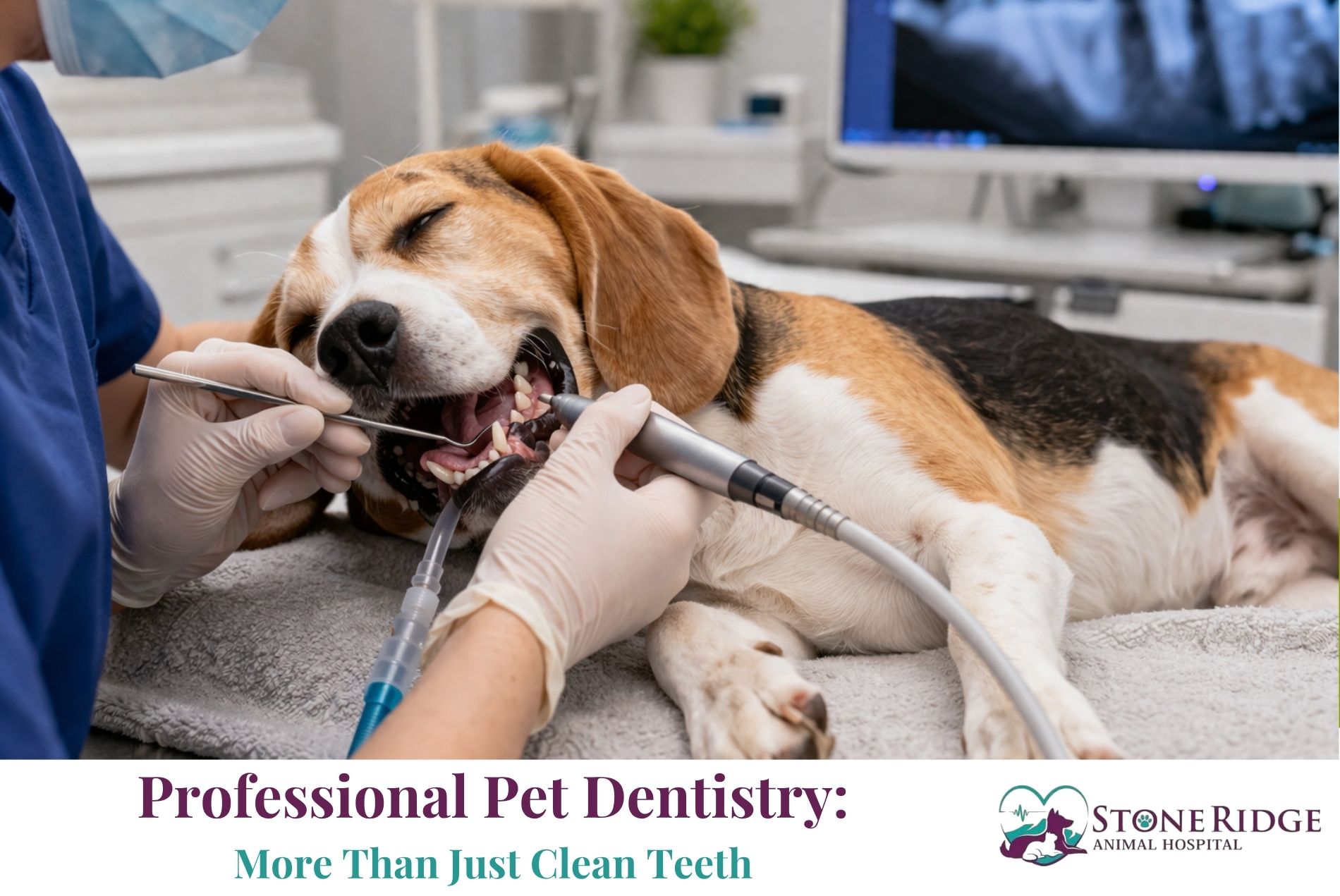
Professional pet dentistry includes a full range of services designed to prevent, diagnose, and treat dental issues. At Stone Ridge Animal Hospital, this goes far beyond a basic cleaning.
Comprehensive Dental Services Include:
- Full oral examinations
- Digital dental X-rays (to detect hidden issues below the gumline)
- Ultrasonic scaling to remove plaque and tartar
- Polishing to smooth tooth surfaces
- Tooth extractions when necessary
- Treatment of gum disease and infections
Unlike at-home brushing alone, professional care addresses both visible and hidden problems.
Signs Your Pet May Need Dental Care
Pets are experts at hiding discomfort, so it’s important to watch for subtle signs of dental disease:
- Bad breath (often the first sign)
- Yellow or brown buildup on teeth
- Red, swollen, or bleeding gums
- Difficulty eating or chewing
- Drooling or dropping food
- Pawing at the mouth
- Behavioral changes (irritability or lethargy)
If you notice any of these symptoms, it’s time to schedule a dental evaluation.
The Hidden Danger: Periodontal Disease
Periodontal disease begins with plaque buildup and progresses into infection of the gums and bone.
Stages of Periodontal Disease:
- Gingivitis – Red, inflamed gums
- Early Periodontitis – Minor bone loss
- Moderate Periodontitis – Increased damage and discomfort
- Advanced Periodontitis – Severe infection, tooth loss, and systemic risk
Early intervention is key. The sooner dental disease is treated, the better the outcome for your pet.
Why Professional Cleanings Are Necessary
Even with regular brushing at home, plaque hardens into tartar that cannot be removed without professional tools.
Professional dental cleanings:
- Reach below the gumline
- Remove hardened tartar
- Prevent infection and tooth loss
- Allow early detection of serious issues
At Stone Ridge Animal Hospital, your pet’s safety is our priority. Dental procedures are performed under carefully monitored anesthesia to ensure comfort and precision.
Preventive Dental Care at Home
Professional dentistry is essential—but at-home care plays a big supporting role.
Tips for Maintaining Your Pet’s Oral Health:
- Brush your pet’s teeth regularly using pet-safe toothpaste
- Provide dental chews or toys approved by your veterinarian
- Schedule routine dental exams
- Feed a balanced diet that supports oral health
Consistency is key—even small efforts make a big difference over time.
A Healthier Smile Means a Healthier Pet
Dental care isn’t just about fresh breath—it’s about protecting your pet’s overall health, preventing pain, and improving quality of life.
At Stone Ridge Animal Hospital, we take a comprehensive approach to pet dentistry, combining advanced technology with compassionate care. Whether your pet needs a routine cleaning or advanced treatment, our team is here to help every step of the way.
Frequently Asked Questions (Q&A)
Q: How often should my pet have a dental cleaning?
A: Most pets benefit from a professional cleaning once a year, but some may need more frequent care depending on their breed, age, and dental health.
Q: Is anesthesia safe for dental procedures?
A: Yes. At Stone Ridge Animal Hospital, we use modern anesthesia protocols and continuous monitoring to ensure your pet’s safety and comfort.
Q: Can I skip professional cleanings if I brush my pet’s teeth?
A: Brushing helps, but it cannot remove hardened tartar below the gumline. Professional cleanings are still necessary.
Q: What happens if dental disease is left untreated?
A: Untreated dental disease can lead to pain, tooth loss, infections, and damage to major organs like the heart and kidneys.
Q: How long does a dental procedure take?
A: Most procedures take a few hours, depending on your pet’s needs and whether additional treatments (like extractions) are required.
Q: What age should I start dental care for my pet?
A: Dental care should begin early—ideally when your pet is young—to prevent future issues.
Q: Are certain breeds more prone to dental problems?
A: Yes. Smaller dog breeds and some cats are more susceptible to dental disease and may need more frequent care.
Q: What can I do if my pet won’t tolerate tooth brushing?
A: Dental chews, water additives, and regular professional cleanings can help. Our team can recommend alternatives tailored to your pet.
Contact Stone Ridge Animal Hospital
Stone Ridge Animal Hospital
5435 W. HWY 40
Ocala, FL 34472
(5 miles east of the World Equestrian Center off of Highway 40)
📞 Phone: (352) 351-3588
📧 Email: info@stoneridgeah.com
🌐 Website: stoneridgeah.com
📅 Schedule an Appointment:
https://book.your.vet/?org=stoneridgeah&locationId=24285