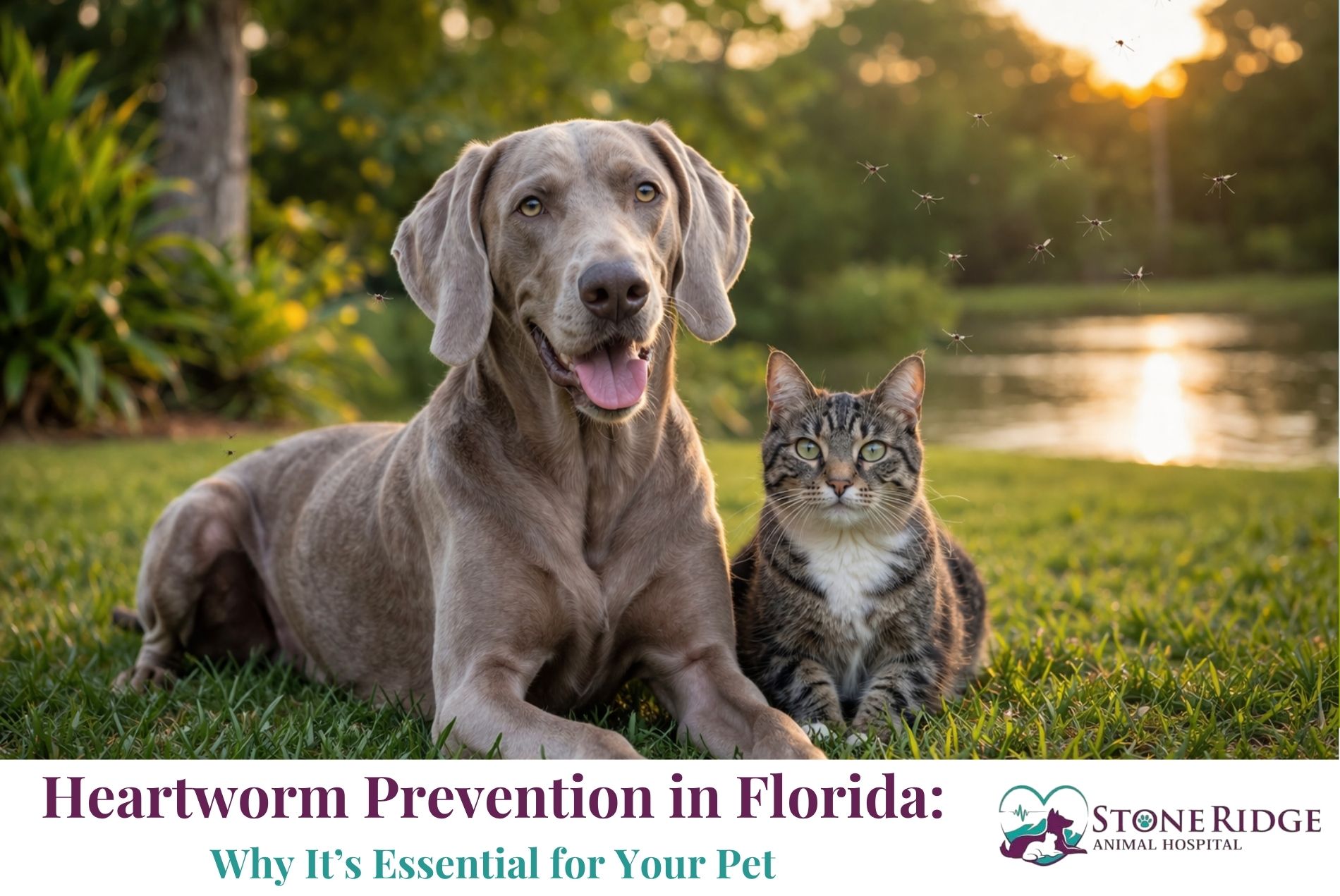
Stone Ridge Animal Hospital – Ocala, FL
Florida’s warm, humid climate isn’t just ideal for sunshine and outdoor living—it’s also the perfect environment for mosquitoes. Unfortunately, mosquitoes are the primary carriers of heartworm disease, a serious and potentially fatal condition affecting both dogs and cats. At Stone Ridge Animal Hospital, we believe prevention is the best protection. Understanding heartworm disease and staying proactive can save your pet’s life.
What Is Heartworm Disease?
Heartworm disease is caused by parasitic worms (Dirofilaria immitis) that live in the heart, lungs, and associated blood vessels of infected animals. These worms are transmitted through mosquito bites. Once inside your pet, the larvae mature into adult worms, sometimes growing up to a foot long.
Over time, heartworms can cause severe lung disease, heart failure, and damage to other organs.
Why Heartworm Prevention Is Crucial in Florida
Florida is considered a high-risk state for heartworm disease due to:
- Year-round mosquito activity
- Warm temperatures that accelerate parasite development
- High pet population density
Unlike colder regions where prevention may be seasonal, Florida pets need protection 12 months a year.
Dogs vs. Cats: Different Risks, Same Importance
Dogs
Dogs are natural hosts for heartworms. Without prevention:
- A single dog can harbor hundreds of worms
- Infection often goes unnoticed until damage is severe
- Treatment is costly and can be risky
Cats
Cats are atypical hosts, but heartworm disease is still dangerous:
- Even a few worms can cause serious respiratory issues
- There is no approved treatment for heartworms in cats
- Prevention is the only reliable protection
Signs of Heartworm Disease
In Dogs:
- Persistent cough
- Fatigue after mild activity
- Weight loss
- Difficulty breathing
In Cats:
- Coughing or asthma-like symptoms
- Vomiting
- Loss of appetite
- Sudden collapse (in severe cases)
Because symptoms may not appear until the disease is advanced, routine testing and prevention are essential.
Prevention Is Simple—and Effective
Heartworm prevention is far easier, safer, and more affordable than treatment. Preventatives come in several forms:
- Monthly chewable tablets
- Topical treatments
- Injectable options lasting up to 6–12 months
At Stone Ridge Animal Hospital, we tailor prevention plans based on your pet’s lifestyle, age, and health.
Annual Testing Matters
Even if your pet is on prevention, annual heartworm testing is recommended for dogs. This ensures:
- Early detection if prevention was missed or ineffective
- Safe continuation of medication
- Peace of mind for pet owners
Comprehensive Q&A Section
Q: Can my indoor pet get heartworms?
A: Yes. Mosquitoes can enter homes easily, putting indoor pets at risk. Even strictly indoor pets should be on prevention.
Q: Is heartworm prevention safe?
A: Absolutely. Preventatives are FDA-approved and widely used. Side effects are rare, especially compared to the risks of heartworm disease.
Q: What happens if I miss a dose?
A: Contact your veterinarian right away. You may need to restart prevention and possibly test your pet to ensure they are still heartworm-free.
Q: How often should my pet be tested?
A: Dogs should be tested annually. Cats are typically diagnosed differently, but your veterinarian can recommend appropriate screening.
Q: Is treatment available if my dog gets heartworms?
A: Yes, but it is expensive, time-consuming, and can be hard on your pet. Prevention is always the better option.
Q: Why is heartworm disease harder to treat in cats?
A: There is no approved medication to eliminate adult heartworms in cats. Treatment focuses on managing symptoms, which can be unpredictable.
Q: Are natural remedies effective?
A: No. There is no scientific evidence supporting natural remedies for heartworm prevention. Veterinary-approved medications are the only reliable option.
Q: How early should I start prevention?
A: Puppies and kittens can typically start prevention as early as 6–8 weeks of age. Your veterinarian will guide you.
Q: Does prevention also protect against other parasites?
A: Many heartworm preventatives also protect against intestinal parasites, fleas, or ticks, depending on the product.
Q: Why is year-round prevention necessary?
A: In Florida, mosquitoes are active all year. Skipping even one month can leave your pet vulnerable to infection.
Protect Your Pet Today
Heartworm disease is preventable—but only if you take action. At Stone Ridge Animal Hospital, we’re here to help you keep your pet safe with personalized prevention plans and compassionate care.
Contact Information
Stone Ridge Animal Hospital
5435 W. HWY 40
Ocala, FL 34472
(5 miles east of the World Equestrian Center off of Highway 40)
📞 Phone: (352) 351-3588
📧 Email: info@stoneridgeah.com
🌐 Website: stoneridgeah.com
📅 Schedule an Appointment:
https://book.your.vet/?org=stoneridgeah&locationId=24285