



Florida’s warm climate, abundant wildlife, and frequent rainfall make it a beautiful place to live—but these same factors also create an environment where certain diseases thrive. One of the most important (and often overlooked) threats to pets in our region is leptospirosis, a bacterial infection that can affect both animals and humans.
At Stone Ridge Animal Hospital, we believe that education is one of the best ways to protect your pet. Here’s everything Ocala pet owners need to know about leptospirosis, including how it spreads, symptoms to watch for, prevention strategies, and when to seek veterinary care.
What Is Leptospirosis?
Leptospirosis is a bacterial disease caused by Leptospira organisms. These bacteria are commonly found in water or soil contaminated with the urine of infected animals, including:
- Wildlife (raccoons, opossums, rodents)
- Livestock
- Other infected dogs
Because Florida has high humidity and frequent standing water, leptospirosis is more prevalent here than in many other parts of the country.
Why Is Leptospirosis a Concern in Ocala?
Ocala’s unique environment increases the risk of exposure:
- Frequent rainfall and puddles create ideal breeding grounds for bacteria
- Rural and wooded areas increase contact with wildlife carriers
- Outdoor activities like hiking, farm visits, and dog parks raise exposure risk
Even dogs that primarily stay at home can be exposed through contaminated soil or water tracked into the yard.
How Do Dogs Get Leptospirosis?
Dogs typically become infected through:
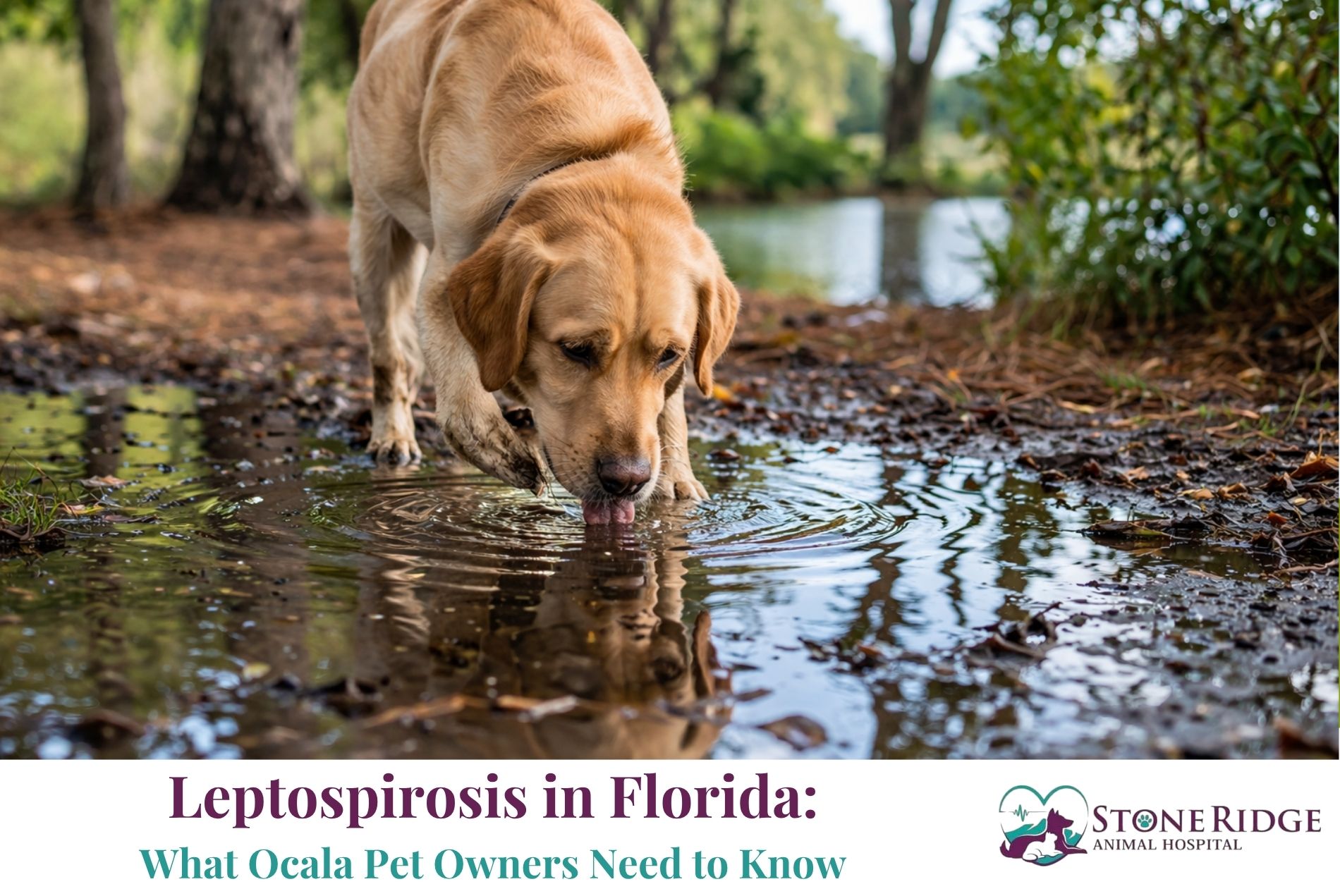
- Drinking or walking through contaminated water (puddles, ponds, ditches)
- Contact with infected urine
- Exposure to contaminated soil
- Bites or contact with infected animals (rare but possible)
The bacteria enter the body through:
- Mucous membranes (eyes, nose, mouth)
- Cuts or abrasions in the skin
Symptoms of Leptospirosis in Dogs
Symptoms can vary widely and may develop suddenly. Some dogs show mild signs, while others become critically ill.
Common symptoms include:
- Fever
- Lethargy or weakness
- Loss of appetite
- Vomiting and diarrhea
- Increased thirst and urination
- Muscle pain or stiffness
- Yellowing of the eyes or gums (jaundice)
- Kidney or liver failure (in severe cases)
⚠️ Important: Leptospirosis can progress quickly. If you notice any of these signs, seek veterinary care immediately.
Is Leptospirosis Dangerous to Humans?
Yes. Leptospirosis is a zoonotic disease, meaning it can spread from animals to humans.
Humans can become infected through:
- Contact with contaminated urine
- Handling infected pets
- Exposure to contaminated water or soil
This makes early diagnosis and treatment especially important—not just for your pet, but for your entire household.
How Is Leptospirosis Diagnosed?
At Stone Ridge Animal Hospital, diagnosis may include:
- Blood tests
- Urine testing
- Specialized lab tests to detect Leptospira bacteria
Because symptoms can mimic other diseases, early veterinary evaluation is critical for accurate diagnosis.
Treatment Options
Leptospirosis is treatable, especially when caught early. Treatment typically involves:
- Antibiotics to eliminate the infection
- IV fluids for dehydration and kidney support
- Hospitalization in severe cases
- Supportive care for liver or kidney complications
Early intervention greatly improves outcomes.
Preventing Leptospirosis in Florida Pets
Prevention is key—especially in high-risk areas like Ocala.
1. Vaccination
The leptospirosis vaccine is the most effective preventive measure. It is especially recommended for:
- Dogs that spend time outdoors
- Pets exposed to wildlife or standing water
- Dogs in rural or semi-rural areas
2. Avoid Standing Water
- Don’t allow your dog to drink from puddles, ponds, or ditches
- Keep outdoor water bowls clean and fresh
3. Wildlife Control
- Secure trash and food sources
- Limit contact with wildlife
4. Maintain a Clean Environment
- Regularly clean outdoor areas
- Reduce rodent activity around your home
When Should You Call Your Veterinarian?
Contact your veterinarian immediately if:
- Your dog shows any symptoms listed above
- Your pet has been exposed to standing water or wildlife
- You’re unsure whether your dog is vaccinated
Prompt care can make a life-saving difference.
Comprehensive Q&A Section
Q: Is leptospirosis common in Florida?
A: Yes. Florida’s warm, wet climate makes it one of the higher-risk states for leptospirosis.
Q: Can indoor dogs get leptospirosis?
A: Yes. Even indoor dogs can be exposed through contaminated soil, water, or contact with infected animals.
Q: How effective is the leptospirosis vaccine?
A: The vaccine is highly effective at preventing severe illness and is strongly recommended for at-risk dogs.
Q: How often does my dog need the leptospirosis vaccine?
A: Typically, dogs receive an initial series followed by annual boosters. Your veterinarian will recommend the best schedule.
Q: Can cats get leptospirosis?
A: Cats are less commonly affected but can still be exposed. Dogs are at significantly higher risk.
Q: How quickly does leptospirosis progress?
A: Symptoms can appear within a few days to weeks after exposure and may worsen rapidly without treatment.
Q: Is leptospirosis curable?
A: Yes, especially if caught early. However, severe cases can cause long-term organ damage.
Q: Should I be concerned if my dog drinks from puddles?
A: Yes. This is one of the most common ways dogs contract leptospirosis.
Q: Can humans get leptospirosis from dogs?
A: Yes. Proper hygiene and prompt veterinary care reduce the risk.
Q: What should I do if I suspect exposure?
A: Contact your veterinarian immediately for guidance and possible testing.
Protect Your Pet with Stone Ridge Animal Hospital
Leptospirosis is a serious but preventable disease. With proper awareness, vaccination, and timely care, you can significantly reduce your pet’s risk.
If you have questions about leptospirosis or want to ensure your pet is protected, our team at Stone Ridge Animal Hospital is here to help.
Contact Information
Stone Ridge Animal Hospital
5435 W. HWY 40
Ocala, FL 34472
(5 miles east of the World Equestrian Center off of Highway 40)
📞 Phone: (352) 351-3588
📧 Email: info@stoneridgeah.com
🌐 Website: stoneridgeah.com
📅 Schedule an Appointment:
https://book.your.vet/?org=stoneridgeah&locationId=24285