By Stone Ridge Animal Hospital
When it comes to your pet’s health, early detection can make all the difference. Just like in human medicine, identifying disease in its earliest stages often leads to more effective treatment, improved outcomes, and a better quality of life. At Stone Ridge Animal Hospital, we believe that veterinary diagnostics are one of the most powerful tools in preventive care—helping us catch issues before they become serious problems.
What Are Veterinary Diagnostics?
Veterinary diagnostics refer to a wide range of tools and tests used to evaluate your pet’s health. These may include:
- Blood work and laboratory testing
- Urinalysis and fecal exams
- Digital X-rays (radiographs)
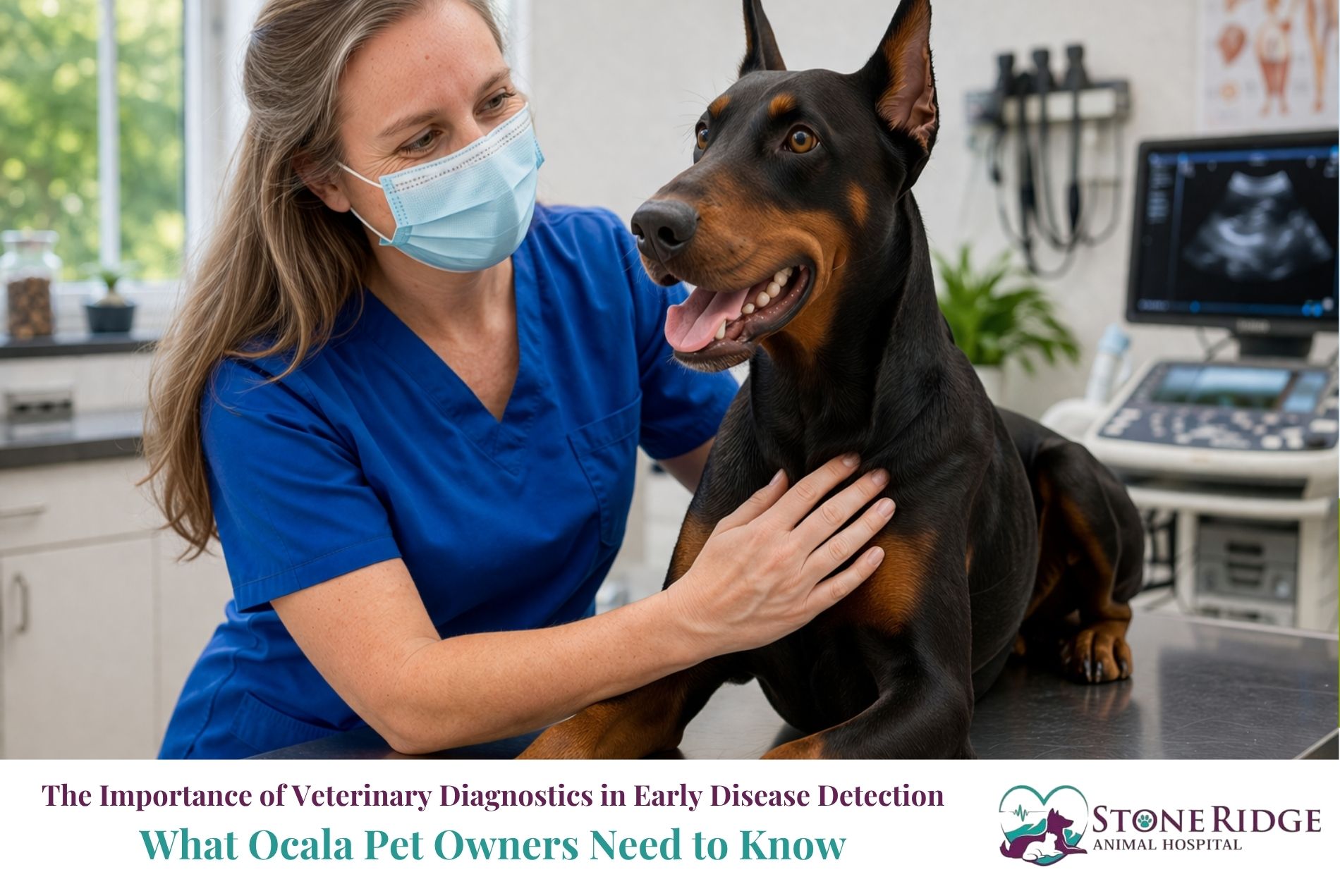
- Ultrasound imaging
- Cytology (examining cells under a microscope)
- Allergy and hormone testing
These diagnostic tools allow veterinarians to look beneath the surface—often identifying conditions that may not yet show obvious symptoms.
Why Early Detection Matters
Pets are masters at hiding discomfort. By the time visible symptoms appear, a condition may already be advanced. Diagnostic testing helps us detect subtle changes early, often before your pet shows signs of illness.
Key Benefits of Early Detection:
- More Effective Treatment
Conditions caught early are typically easier—and less expensive—to treat. - Improved Quality of Life
Early intervention can prevent unnecessary pain and suffering. - Longer Lifespan
Chronic conditions like kidney disease, diabetes, and heart disease can be managed more successfully when detected early. - Peace of Mind for Pet Owners
Routine diagnostics provide reassurance that your pet is healthy or help you act quickly if something is wrong.
Common Conditions Detected Through Diagnostics
At Stone Ridge Animal Hospital, diagnostic testing helps us identify a variety of conditions, including:
- Kidney and liver disease
- Diabetes
- Thyroid imbalances
- Heart disease
- Infections and parasites
- Cancer (in some cases)
- Urinary tract issues
Even routine wellness exams often include basic diagnostic tests to establish a health baseline for your pet.
When Should Your Pet Have Diagnostic Testing?
While diagnostics are essential when your pet is sick, they are equally important as part of preventive care.
Recommended Situations for Diagnostics:
- Annual or biannual wellness exams
- Senior pet check-ups (typically age 7+)
- Before surgery or anesthesia
- When symptoms arise (vomiting, lethargy, weight loss, etc.)
- Monitoring ongoing conditions
Regular testing allows us to track trends over time, making it easier to detect even minor changes.
Our Commitment to Advanced Diagnostics
At Stone Ridge Animal Hospital, we combine compassionate care with advanced diagnostic technology. Our goal is to provide accurate, timely answers so we can create the best possible treatment plan for your pet.
Whether your pet needs routine screening or more in-depth evaluation, our experienced team is here to guide you every step of the way.
Comprehensive Q&A Section
Q: Why does my pet need diagnostic testing if they seem healthy?
A: Many diseases develop silently. Routine diagnostics can catch issues early—before symptoms appear—allowing for quicker and more effective treatment.
Q: Are diagnostic tests safe for my pet?
A: Yes. Most diagnostic tests, such as blood work or imaging, are minimally invasive and very safe. Your veterinarian will always recommend the safest options for your pet’s specific needs.
Q: How often should my pet have blood work done?
A: For most pets, annual blood work is recommended. Senior pets or those with existing conditions may benefit from testing every 6 months.
Q: What are the signs that my pet might need diagnostics?
A: Watch for changes such as:
- Decreased appetite
- Lethargy
- Vomiting or diarrhea
- Increased thirst or urination
- Weight loss or gain
- Behavioral changes
If you notice any of these, diagnostic testing can help identify the cause.
Q: Is diagnostic testing expensive?
A: Costs vary depending on the test, but early detection often saves money in the long run by preventing more serious (and costly) conditions.
Q: Can diagnostics detect cancer early?
A: While not all cancers are detectable early, certain tests and screenings can identify abnormalities that may indicate cancer, allowing for earlier intervention.
Q: What happens if a test result is abnormal?
A: Your veterinarian will explain the findings and recommend next steps, which may include additional testing, treatment, or monitoring.
Q: Do senior pets need more frequent diagnostics?
A: Yes. As pets age, they are more prone to chronic conditions. Regular diagnostics help us manage their health proactively.
Contact Stone Ridge Animal Hospital
Stone Ridge Animal Hospital
5435 W. HWY 40
Ocala, FL 34472
(5 miles east of the World Equestrian Center off of Highway 40)
📞 Phone: (352) 351-3588
📧 Email: info@stoneridgeah.com
🌐 Website: stoneridgeah.com
📅 Schedule an Appointment:
https://book.your.vet/?org=stoneridgeah&locationId=24285